From September through May, our Chapter offers educational programs to build a planner's understanding of current and relevant issues. First time attendee? Email us to attend any monthly meeting at no charge. Our meetings are all in-person.
Next up: Our Keynote Event
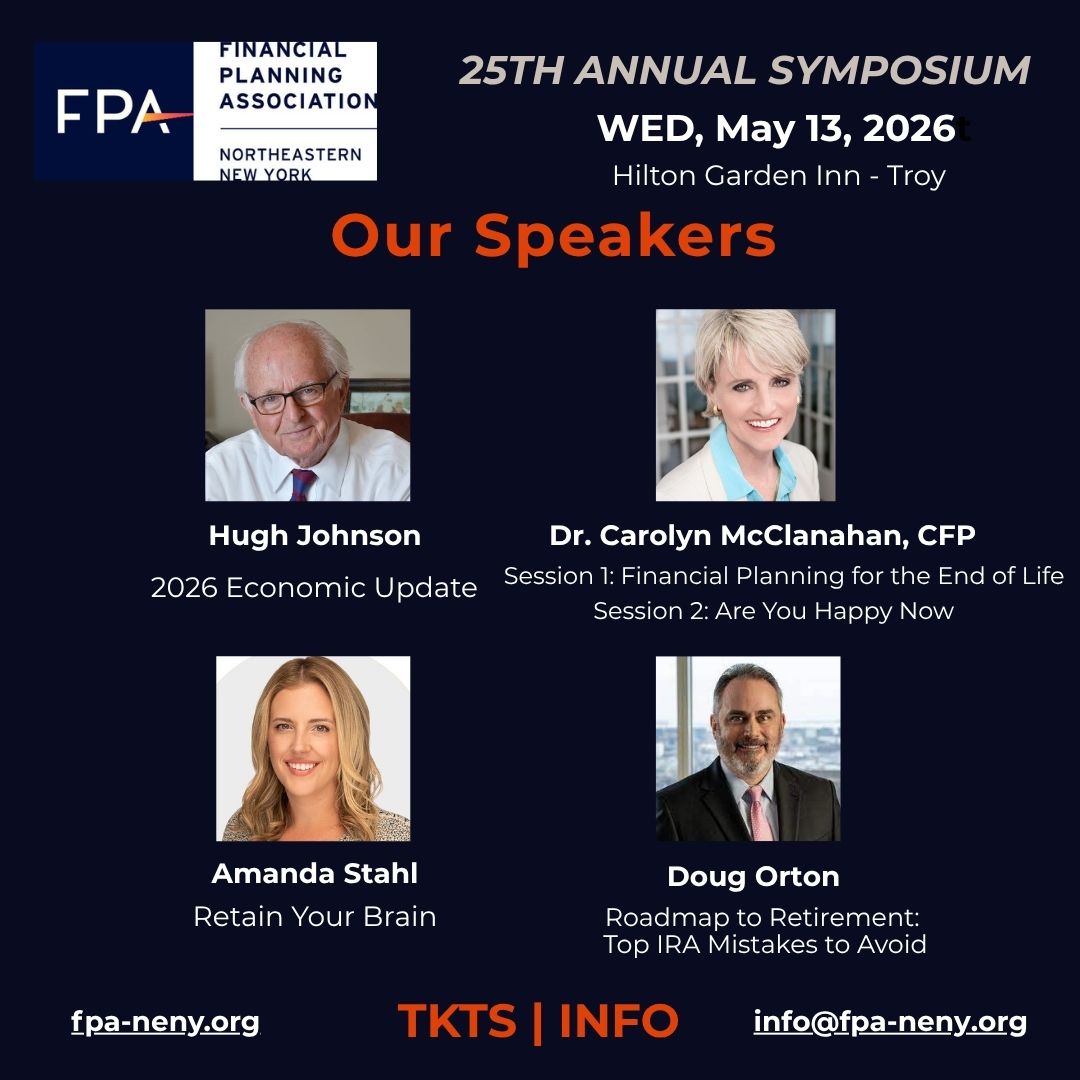
The 25th Annual Symposium
Wednesday, May 13, 2026
Just look at this Silver Anniversary Line-up!
click on the Symposium tab for details
Session/Time
Reg/Breakfast at 8:15am
1: 9:00am to 9:50am
2: 10:15am to 11:05am
3: 11:25am to 12:15pm
Lunch 12:15pm – 1:00pm
4: 1:00pm to 1:50pm
5: 2:00pm to 2:50pm
Raffle 2:50pm to 3:10pm
Happy Hour 3:10pm to 4:30pm
September 25, 2025 Thursday
1.5 hours
Expected CE: CFP, CPA and other self-reporting designations
TARIFFS, TRADE, AND TAXES, OH MY! TAX & FINANCIAL PLANNING IN A BIG, BEAUTIFUL TAX WORLD
Speaker: Marty S. Finn, JD, LL.M., CPA/PFS, Senior Partner, RLGC Law Group, PLLC
This course will provide a comprehensive view of tax law changes that will impact your clients’ tax and financial planning options now and in the future. We will consider old and new planning opportunities and, more importantly, we will review tax planning strategies that clients should consider before year end to reduce the impact of a changing tax world.
Learning Objectives:
- Review proposed/enacted tax law changes impacting out clients’ tax and financial planning.
- Discuss planning opportunities that all clients need to consider to keep their tax and financial plans relevant and current.
- Review year end tax planning strategies to reduce the impact of taxes on financial decisions.
Time: 7:30 A.M. Reg/Breakfast | 7:45 – 9:15 A.M. Program
Venue: Wolferts Roost Country Club
Register Now
October 16, 2025 Thursday
1 hour
Expected CE: CFP, CPA and other self-reporting designations
THE LATEST TRENDS IN COLLEGE ADMISSIONS AND FINANCIAL AID:
HOW WILL YOUR CLIENTS CHOOSE BETWEEN RETIREMENT AND PAYING FOR COLLEGE?
Speaker: Dr. Dean Skarlis, Founder, The College Advisor of New York
College costs continue to rise dramatically. When families feel the tension between saving for retirement and college, they often make mistakes that can yield considerable debt. We will discuss the latest trends in admission, changes to college costs and present strategies to save and pay for college. In addition, Congress and the Trump Administration made significant changes to college finances.
Learning Objectives:
- The latest changes implemented by the Trump Administration affecting how much students and parents can borrow for college.
- Simple Steps on how to help clients determine they will qualify for aid and scholarships early in the process – which could save tens of thousands of dollars.
- The latest strategies to get more financial aid and pay for college.
- Case studies that illustrate how to best approach college planning.
Time: 7:30 A.M. Reg/Breakfast | 7:45 – 9:00 A.M. Program
Venue: Wolferts Roost Country Club
Register Now
November 20, 2025, Thursday
1 Hour
Expected CE: 1 hour CFP, CPA, and self-reporting designations

HELPING NERVOUS CLIENTS UNDERSTAND AND FINANCIALLY PLAN FOR THE (TRUE) STATE OF THE SOCIAL SECURITY SYSTEM
Speaker: Adam Van Deusen, CFP®, Kitces.com
Given frequent news headlines on the (un)sustainability of the Social Security System, many working age financial advisory clients might harbor doubts about receiving their full (or any of their) estimated Social Security benefits. In this session, we dive deep into data from the Social Security Board of Trustees’ Annual Report to clear up common misconceptions about the actual health of the Social Security system, review a range of policy options being considered to shore up Social Security for the rest of the century, and discuss how financial advisors can analyze the impact of these policies for both working-age, near retirement, and already retired clients, and ways to adapt financial planning assumptions to model the scenarios, providing clients with a more accurate picture of how they might (or might not) be affected.
Learning Objectives:
- Understand the mechanics of how the Social Security trust fund operates.
- Explain the expected trajectory of the Social Security trust fund and the factors that will influence its future path.
- Learn how clients’ Social Security benefits would be expected to change if the trust fund is exhausted.
- Identify potential policy options, including changes to taxes and benefits, that could be considered by Congress to put the Social Security system on a more sustainable path.
- Learn how financial advisors can support their clients by modeling different paths and policy scenarios for the Social Security system and their implications for each client’s financial plan.
Time: 7:30 A.M. Reg/Breakfast | 7:45 – 9:00 A.M. Program
Venue: Wolferts Roost Country Club
Register Now
December 18, 2025, Thursday
1.5 Hours
Expected CE: 1 hour CFP, CPA, and self-reporting designations

THE BIG, BEAUTIFUL SHIFT: WHAT THE 2025 REFORM MEANS FOR ESTATE & FINANCIAL PLANNING
Speaker: Tara Anne Pleat, Esq. of Wilcenski & Pleat PLLC
- Recognize the key tax and entitlement law changes introduced in the 2025 federal reform package and how they influence foundational estate and financial planning.
- Identify how updates to public benefit benefits programs including Medicaid, Medicare, and Social Security – impact long-term care and special needs planning, especially for clients facing aging or disability.
- Understand how revised trust structures, gifting opportunities, and asset protection strategies can be coordinated with financial plans in light of the new legal landscape.
- Strengthen cross-disciplinary collaboration with estate and elder law attorneys to ensure client plans are legally sound, tax-efficient, and responsive to the needs of both the affluent and vulnerable clients.
Time: 7:30 A.M. Reg/Breakfast | 7:45 – 9:15 A.M. Program
Venue: Wolferts Roost Country Club
Register Now
January 15, 2026, Thursday
1 Hour
Expected CE: 1 hour CFP, CPA, and self-reporting designations

CREATE A PLATINUM PRACTICE
Yes, a different speaker was originally scheduled – a substitution was needed.
Speaker: Graham T. Kimmerer, Senior Business Development Strategist, MFS
Every advisor has a slightly different version of what their ideal practice is. What makes your practice successful today? What will it take to keep that going a decade from now or even two? You need an edge, a way to create your ideal practice, grow your business, and serve your clients in the best way possible. Over 100 years of partnering with financial practices has given MFS an information edge. We understand that the industry evolves and your needs change. We’ve put that insight into a program called, MFS Advisor Edge. These are value add programs for professional financial advisors. With MFS advisor edge, you’ll get actionable ideas to use immediately and resources that help you find your brand of excellence. Creating a platinum practice allows you to operate your team in a more efficient manner. Graham will share a variety of ways to help you create your ideal practice.
Time: 7:45 – 9:00 A.M. Program
Venue: Wolferts Roost Country Club
Register Now
February 12, 2026 Thursday
1 Hour
Expected CE: 1 hour CFP, CPA, and self-reporting designations

Protecting Portfolios and Passwords: A Cybersecurity Survival Guide for Financial Planners
Speaker: Reg Harnish, CEO, OrbitalFire
Financial planners know risk. You help clients prepare for market swings, unexpected life events, and long-term goals. But when it comes to cybersecurity, both your own and your clients’, the risks are often underestimated, misunderstood, or simply ignored. In this fast-paced, no-nonsense session, Reg Harnish, CEO of OrbitalFire Cybersecurity, will break down the 5 to 10 critical things every financial planner should be thinking about to protect themselves, their practice, and their data. These are not “pie in the sky” enterprise controls. This is practical, effective cybersecurity designed for the reality of smaller businesses like yours.
Then we will flip the lens and talk about your clients. Cyber risk is financial risk. Reg will arm you with three essential conversations you should be having with clients to help them protect their assets, reputations, and futures. Think of it as a new kind of risk management that belongs in your toolkit right next to asset allocation and tax planning. You will leave with actionable strategies to reduce your own exposure and add real value to your client relationships. Because protecting wealth now means protecting data too.
Learning Objectives:
By the end of this session, participants will be able to:
- Identify 5 to 10 critical cybersecurity practices that financial planners can implement to protect their business, data, and clients.
- Recognize the connection between cyber risk and financial risk to better advise clients.
- Apply three key cybersecurity conversation starters with clients to help them reduce exposure and safeguard their assets.
- Develop a basic action plan to strengthen their own cybersecurity posture while enhancing the value they deliver to clients.
Time: 7:30 A.M. Reg/Breakfast | 7:45 – 9:00 A.M. Program
Venue: Wolferts Roost Country Club
Register Now
March 19, 2026, Thursday
TWO 1 hour programs ⇒ 1 ticket!
Expected CE: EACH program: 1 hour CFP, CPA, and self-reporting designations

Speaker: Eric Ludwig, Ph.D. CFP, The American College of Financial Services
Program 1: The Science of Advisor Effectiveness: What AI Analysis of 100,000 Conversations Teaches Us About Client Success (8:00 to 8:50 A.M.)
Financial advisors have long relied on experience, intuition, and anecdotal feedback to refine their client communication skills. However, without objective, data-driven insight into what actually drives successful client outcomes, advisors may unknowingly repeat ineffective patterns or miss critical opportunities to deepen trust and engagement. This gap between perceived effectiveness and actual effectiveness can lead to lower client retention, reduced plan implementation rates, and suboptimal financial outcomes for the families advisors serve. This presentation draws on AI-powered analysis of over 100,000 real advisor-client conversations to reveal the specific communication behaviors, conversation structures, and engagement strategies that distinguish top-performing advisors, giving attendees an evidence-based framework they can immediately apply to strengthen their own client relationships and improve outcomes.
Learning Objectives:
- Identify the key communication patterns and behaviors that AI analysis reveals are most strongly associated with positive client outcomes and engagement.
- Evaluate your own advisory conversations against data-driven benchmarks to recognize areas of strength and opportunities for improvement.
- Apply evidence-based conversation strategies to enhance client trust, increase plan implementation, and improve long-term client retention.
Program 2: HOW MUCH CAN I REALLY WITHDRAW? NAVIGATING SAFE RETIREMENT SPENDING IN TODAY’S MARKET (9:10 to 10:00 A.M.)
As market conditions evolve and traditional retirement income rules face new challenges, financial advisors are encountering clients who are uncertain about unsustainable withdrawal rates from their retirement portfolios. The classic 4% may no longer provide adequate guidance in an environment of elevated equity valuations and shifting bond yields, potentially leading to either premature portfolio depletion or unnecessarily conservative spending that diminishes the quality of life. This uncertainty can undermine advisor confidence in withdrawal recommendations and leave clients anxious about their financial security throughout retirement. This presentation will equip advisors with current research-based frameworks for determining appropriate withdrawal strategies based on changing market conditions and client priorities.
Learning Objectives:
- Analyze current research on safe withdrawal rates and understand why traditional rules may need updating
- Evaluate different withdrawal strategies and their impact on portfolio longevity versus lifetime spending
- Apply flexible withdrawal frameworks that can adapt to market conditions and client circumstances
- Assess the trade-offs between maximizing retirement income and preserving assets for bequests
- Develop communication strategies to help clients understand withdrawal decisions and manage retirement spending anxiety
Time: 7:30 A.M. Reg/Breakfast | Program 1: 7:50 – 8:45 A.M. Program 2: 9:15 – 10:00 A.M.
Venue: Wolferts Roost Country Club
Register Now
May 13, 2026
*****************************************************************
2026 FPA NENY 25th Annual Symposium
Course Descriptions and Learning Objectives
Click on the down arrow to expand and close tabs.
 Presented by Hugh Johnson of Hugh Johnson Economics LLC
Join nationally recognized economist and market strategist Hugh Johnson for candid, data-driven analysis of the economic and capital market outlook for 2026. Hugh delivers a clear-eyed assessment of the economic forces shaping the investment landscape, including monetary policy, inflation trends, interest rates, corporate earnings, fiscal policy, and global risks.
Designed specifically for CFP® professionals and financial planners, this course translates economic projections into actionable planning considerations. Participants will gain practical insights to inform portfolio positioning, risk management, retirement income strategies, and client communication in an evolving market environment.
This session emphasizes cutting through market noise and headline-driven volatility to focus on the structural trends and economic indicators that matter most for long-term planning.
Learning Objectives
Upon completion of this course, participants will be able to:
- Evaluate the current U.S. and global economic environment and its projected trajectory for 2026.
- Analyze the impact of Federal Reserve policy, inflation, and interest rate movements on fixed income and equity markets.
- Assess key market risks and opportunities affecting asset allocation decisions.
- Apply economic forecasts to client portfolio construction and financial planning strategies.
- Communicate economic developments clearly and effectively to clients.
CE pending
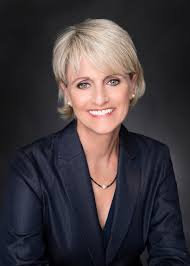 Presented by Carolyn McClanahan, M.D., CFP® of carolynmcclanahan.com
Finances at the end of life present a major concern for both patients and their families. Financial planners are in a unique position to help clients through these difficult times. Carolyn reviews how to comfortably approach end of life situations and work with clients on specific end of life financial concerns. Tax planning, income planning, and beneficiary issues that need to be addressed through each stage of advanced illness will be addressed. Planners will come away with a new level of comfort, understanding, and appreciation on ways to help and guide families through the end of life process.
Learning Objectives:
- Analyze the financial planning implications of advanced illness and end-of-life scenarios, including income tax, cash flow, estate distribution, and beneficiary designation considerations.
- Evaluate planning strategies to address tax efficiency, income sustainability, and asset transfer issues that arise during the progression of serious illness.
- Apply appropriate communication and ethical practices when engaging clients and their families in end-of-life financial planning discussions in accordance with CFP Board’s Code of Ethics and Standards of Conduct.
CE pending
Presented by Carolyn McClanahan, M.D., CFP® of carolynmcclanahan.com
Much of financial advice hinges on predicting the future. Unfortunately, we fail miserably at getting the future right. Instead of predictions, we need to provide solutions to help clients improve current life satisfaction. I discuss how our firm helps clients focus on a great life in the present while building financial, emotional, and physical resiliency for the future. I cover how the firm addresses each part of the planning process keeping the focus on resiliency in mind.
Learning Objectives:
- Evaluate the limitations of traditional future-focused financial forecasting and explain how present-focused planning can enhance client life satisfaction and decision-making outcomes.
- Analyze strategies for integrating financial, emotional, and physical resiliency into the financial planning process to support both current well-being and long-term stability.
- Apply a resiliency-centered planning framework across the key elements of the financial planning process
CE pending
 Presented by Amanda Stahl of Hartford Funds
As humans, it’s easy for us to take our brain functions for granted, yet the loss of those functions can have severe impacts on your clients’ health, finances, and overall wellbeing. The costs of an unhealthy brain can be significant. The average lifetime cost of having dementia is $392,874, which can include medical expenses, caregiving, home modifications, lost income, legal fees, hospice, and end-of-life care. Given that, financial professionals must understand the need to help protect against those unexpected—and often catastrophic—financial risks. Additionally, financial professionals should understand the impact of brain health on older clients’ financial decision making, risk of financial fraud, unpaid debt, potential loss of income, and dependence on family members. But financial professionals should also understand simple lifestyle choices that can help lessen the risk of poor brain health, both for themselves and their clients. More and more research reveals a powerful message: that we—not our genes—can have control over our cognitive health today and the long-term destiny of our brains. Financial professionals already focus on helping ensure a client’s wealth lasts as long as the client lives. By understanding the simple tips we’ll share in this presentation, they can help ensure a client’s brain health lasts longer, too.
Learning Objectives:
- Why your clients’ brain may not be the same age as they are
- How brain health can affect your clients’ lifestyle and finances
- Simple tips to help clients age-proof their brains
- Understand what Medicare and Medicaid will and won’t cover
- How clients don’t necessarily plan to be diagnosed with Alzheimer’s and are therefore financially unprepared for their future needs
- Understand the types of expenses related to cognitive decline: Medication, caregiving, housing, and memory care
- Learn the legal documents that may be needed for cognitive decline: Durable power of attorney, trusts, a living will, and a durable power of attorney for healthcare.
- Practical tips to clients can take to age-proof your brain and prevent or delay cognitive decline Why it’s important to plan early for cognitive decline
- How a financial professional can help clients develop a plan to pay for the costs of dementia including choosing investment options and creating a retirement plan that considers potential costs of dementia
- How understanding the causes of cognitive decline and its financial implications can help a planner develop a relationship of honesty and trust in client interaction
CE pending
 Presented by Doug Orton of MFS
Commonly made IRA planning mistakes put clients’ retirement plans in jeopardy and threaten client/advisor relationships. This presentation will help advisors and their clients avoid these common mistakes by communicating what to look for. The collective goal is to make the most of IRA savings. The speaker will focus on problem areas, including beneficiary designations, spousal inheritance options and IRA, Roth IRA and RMD issues.
Learning Objectives:
- Tax diversification and early retirement strategies
- Retirement income planning and tax-effective withdrawal strategies
- Understanding RMD rules
- Maximizing Social Security and spousal legacy strategies
CE pending.
Register Now
Session/Time
Reg/Breakfast at 8:15am
1: 9:00am to 9:50am
2: 10:15am to 11:05am
3: 11:25am to 12:15pm
Lunch 12:15pm to 1:00pm
4: 1:00pm to 1:50pm
5: 2:00 to 2:50pm
Raffle 2:50 to 3:10pm
Happy Hour 3:10 to 4:30pm